
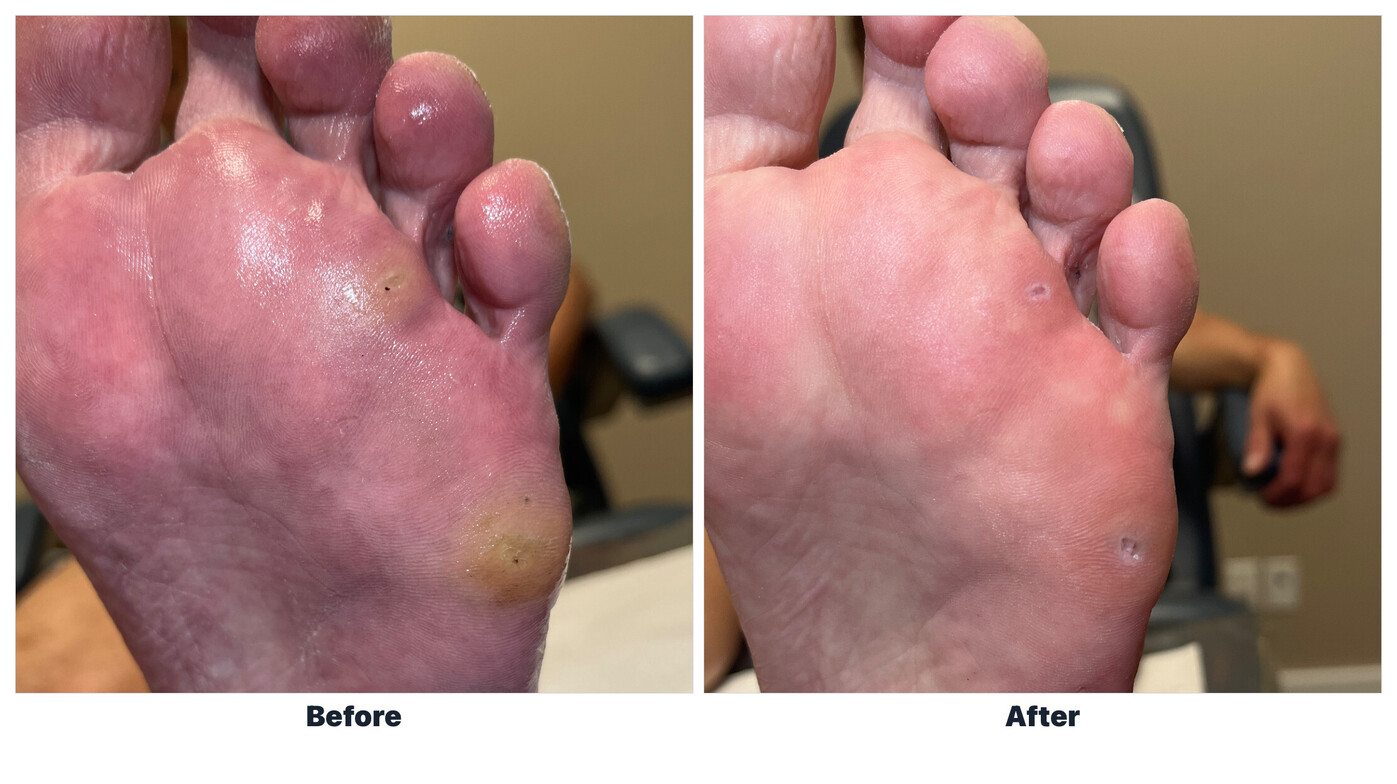
Corns are small, focused areas of hard skin. Unlike a callus, which is usually broad and even, a corn has a distinct central core.
Why does a corn form?
A corn develops where repeated pressure or rubbing is concentrated in one small area. It often forms over a bony prominence, such as a metatarsal head or toe joint. The skin thickens to protect itself, but the focused core can press inward and become uncomfortable during standing or walking.
What can a chiropodist do?
A chiropodist can assess the area and carefully reduce the thickened skin and central core. This can reduce the pressure created by the corn, but it does not automatically remove the mechanical reason it formed.
Why can a corn return?
If the same pressure continues—from footwear, foot structure, toe position or the way the foot loads—the corn may build up again. Management may also include pressure relief, footwear changes, padding, orthotics or another plan based on the assessment.
Clinical example
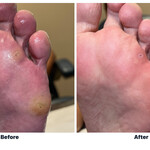
The images attached to this article show one clinical example of professional corn reduction. The lesions are small and focused, with distinct central cores over pressure areas of the forefoot.
Clinical-image notice: The attached photographs show real feet before and after professional corn reduction. Images are used with informed consent and identifying details have been removed. Individual results vary. Corns may return if the underlying pressure continues.
When should you have it assessed?
If a hard spot is painful, keeps returning, or you are unsure whether it is a corn, callus or wart, have it assessed before trying to remove it yourself. This is especially important for people with diabetes, reduced circulation, neuropathy or reduced sensation.
The main point
Reducing the corn may help, but understanding where the pressure comes from is what guides longer-term management.
Book an initial consultation if you have a painful or recurring area that needs assessment.
Patrick Rainville, Chiropodist
